NEVI Update: Growth, Challenges, and the Jetsons
The Ports Were Never the Point
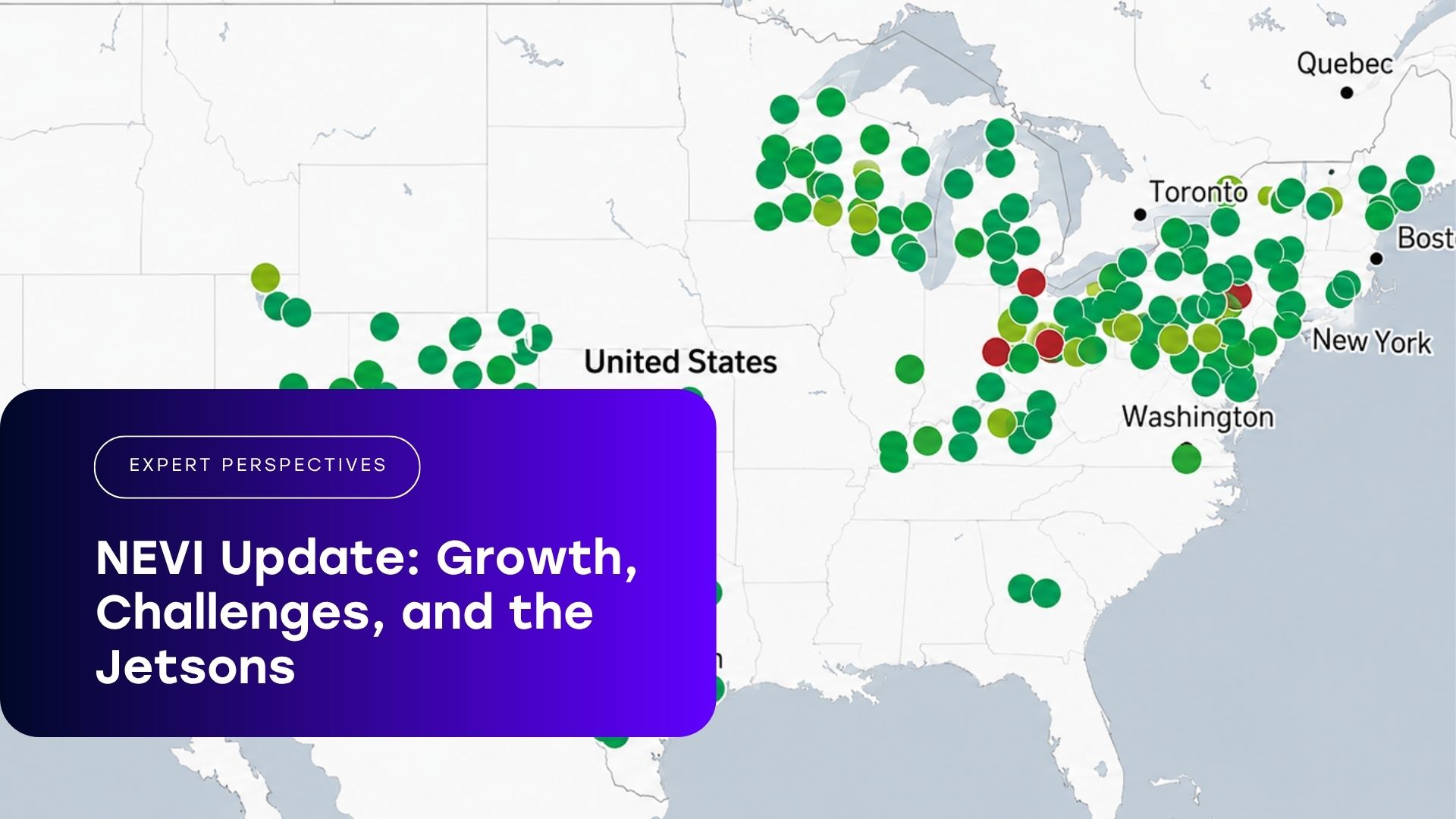
The often-maligned National Electric Vehicle Infrastructure (NEVI) charger funding program is nearing its fifth anniversary. Critics have called NEVI a boondoggle, and through early 2025, the arithmetic was on their side: billions appropriated, a handful of chargers energized. As of August 17, 2026, the program now has 226 stations and 1,170 ports open across 22 states with an average award of $137,000 per port — and it has more than doubled the number of companies willing to operate a public charger in the United States.
Francis Energy, Pilot Flying J, Tesla and Kwik Charge are the networks with the most deployed sites. The program is on track to easily beat last year’s record 100 sites as 81 have been energized already this year with many more in the Q3/Q4 pipeline.
But NEVI was never expected to lead the industry in port count. Based on Paren data, NEVI represented approximately 3% of the overall new U.S. ports in 2025. So far this year, new NEVI installs account for slightly over 4% of the overall growth.
What NEVI did do, however, is light a fire under hardware manufacturers and CPOs to create what we call the Great American Charging Buildout. Companies like Alpitronic and Kempower established footholds in the U.S. to address the Build America, Buy America (BABA) requirements. With a new emphasis on EV charging reliability, BTC, Signet, ABB, and others refreshed their product lines with newer, better charging equipment to meet demand that has outrun most forecasts.
Legacy charging networks like Electrify America and EVgo refreshed their once-aging infrastructure to bring better charging experiences to the 4 million drivers who use public fast charging every week. Tesla also opened its stack to outsiders: Supercharger for Business lets a CPO put its own logo on Tesla hardware and own the site. And, of course, Ionna and Walmart have entered the market post-NEVI as major players in this buildout.
What the Pause Left Behind
NEVI was never perfect, but most states figured out a way to make it work. The 2025 federal government NEVI pause has had a lasting impact on the program. The biggest impact has been on those states that were in the middle of the 2nd, 3rd or even 4th funding round. The pause caused several station award winners to rethink their strategy. Some bowed out completely, others went ahead and built the sites without any funding. This leaves the states to decide whether it makes sense to re-run the funding round or leverage the updated federal guidance of using public infrastructure growth to calculate their “fully built out” status. We expect that states will want to use both options, so they don’t leave any available money on the table.
The Money That Doesn’t Expire
Speaking of available money, NEVI continues to be a target. Approximately $500 million in NEVI funds was rescinded under the Consolidated Appropriations Act, 2026, signed in February. The BUILD America 250 Act, approved in committee, declines to reauthorize NEVI beyond FY2026. The 2027 White House budget proposal earmarked canceling $4.2 billion in unobligated NEVI and Charging and Fueling Infrastructure (CFI) funds.
However, the Continuing Resolution (CR) passed by the Senate in August — funding the government through December 11, 2026 — contains no language rescinding NEVI funds. Nor does it extend the IIJA's Division J advance appropriations, which expire September 30 as scheduled. For NEVI that distinction matters more than it sounds. The program was never getting an FY2027 allocation, and the money already apportioned to states doesn't lapse: FHWA's own apportionment notice makes NEVI funds available for obligation until expended. NEVI doesn't face a funding cliff. It faces a clawback.
Given the current political climate, no one expects a December CR to touch NEVI. A change in control of one or both chambers in 2027 could reshuffle priorities, though it's worth noting that the bill winding NEVI down is bipartisan. The likelier option isn't a revival of the current NEVI program — it's a different version of the program with different targets. While the fast-charging infrastructure may not need significant additional money due to private buildouts, broader scaling of Level 2 charging for multi-family dwellings as well as funding to build out regional medium/heavy duty infrastructure may be on the table.
Meet the Jetsons
As long as the money is out there, we'll keep encouraging states to build out NEVI-funded infrastructure — and to track it, so the program gets judged on what it actually delivered.
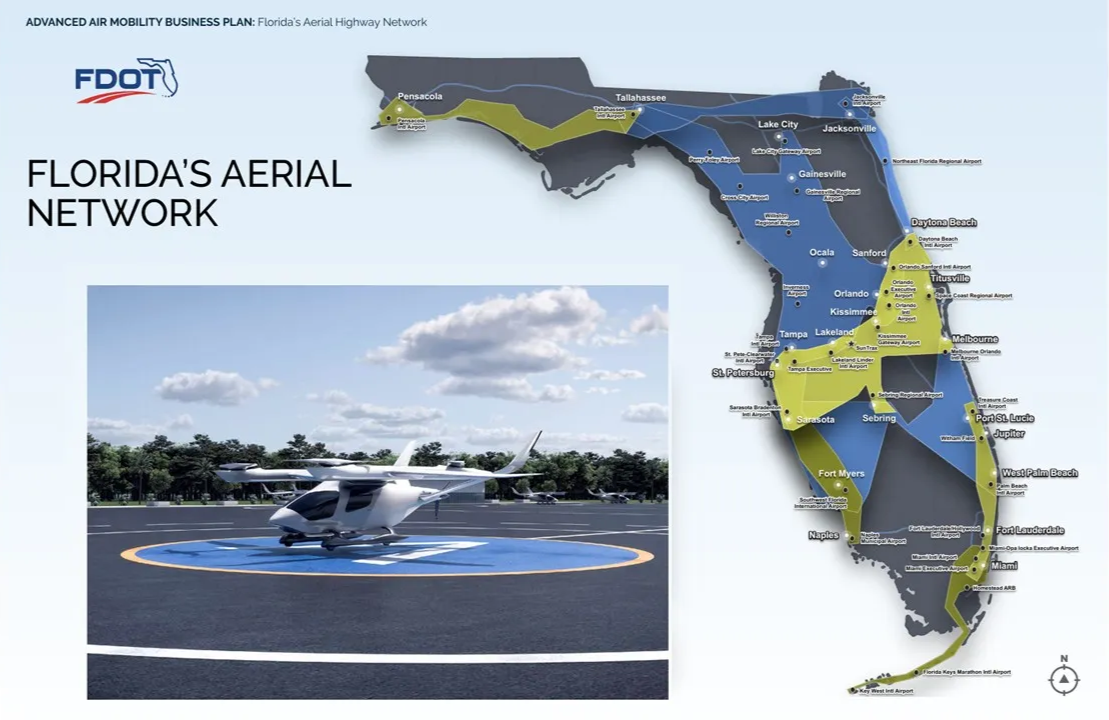
One state caught our attention recently. Florida DOT asked to spend its remaining NEVI funds on vertiports for eVTOLs — flying cars. We immediately pictured George Jetson zipping from downtown Miami to Disney World and plugging in at a federally funded charging space. We applaud FDOT's creativity, and we suspect it will fly. FHWA has already signed off on Florida's corridors as fully built out, and that certification is exactly what lets a state redirect what's left.
This is the clawback logic: money that never expires gets spent on whatever's available before someone takes it back. Nobody in Tallahassee is arguing about whether to build chargers anymore; they’re arguing about what the remaining money could buy.
Which brings us back to the boondoggle. Congress can rescind an appropriation; it can't undo the domestic manufacturing base that NEVI kick-started and what has become the Great American Charging Buildout. Where Paren counted about 70 companies operating public chargers in early 2025, we now count more than 180. That's 110 more companies competing to put a working charger where drivers actually need one, and not one of them is waiting on a federal appropriation to do it.
That's the number worth watching. We'll keep tracking!
- Bill Ferro, Chief Data Officer
